Military Discount
-

-

-
0

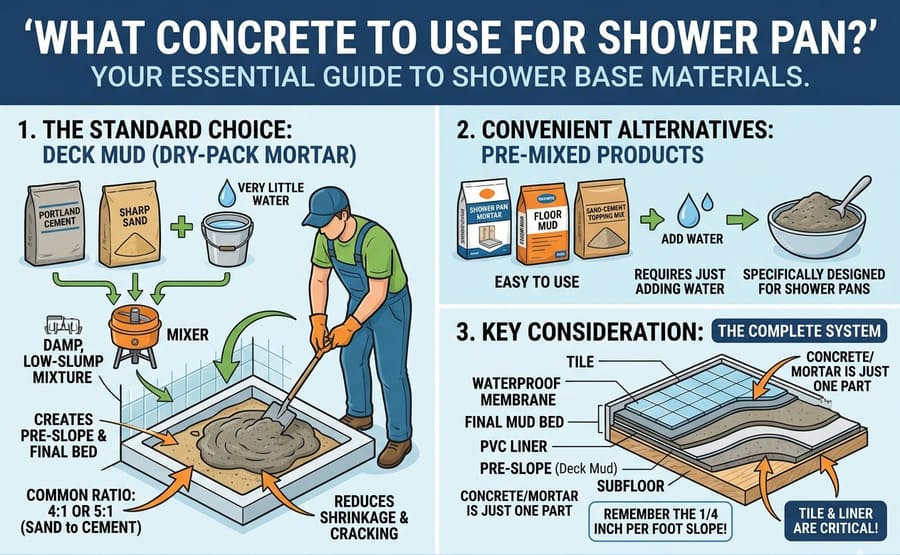
So, you’re building a shower and wondering about the concrete part for the pan? It’s a common question, and honestly, getting it right is pretty important. You don’t want water getting where it shouldn’t, right? It’s not like pouring a sidewalk; there are a few specific things to think about when you’re mixing and laying down the mortar for your shower base. Let’s break down what concrete to use for a shower pan and how to do it without making a huge mess or causing leaks later.
The shower pan is the unsung hero of your bathroom, the first line of defense against water damage. It’s the sloped base that sits under your shower floor, designed to funnel water directly into the drain. Without a properly constructed shower pan, you’re asking for trouble, like mold growth, damaged subfloors, and even structural issues down the line. Think of it as the foundation for your entire shower experience. Getting this part right is non-negotiable if you want your shower to last.
Choosing the right materials for your shower pan isn’t just about what looks good; it’s about performance and longevity. You need something that can handle constant moisture without degrading. While there are pre-made options, many DIYers and professionals opt for a mortar bed. This requires a specific mix that’s workable, durable, and can be shaped to create the necessary slope. Using the wrong type of concrete or mortar can lead to cracking, water pooling, and eventual failure. It’s a bit like picking the right paint for an exterior wall versus an interior one – different jobs require different stuff.
Before you even think about mixing concrete, do yourself a favor and check your local building codes. These codes often dictate specific requirements for shower pan construction, including materials, slope, and waterproofing methods. You’ll also want to look at standards from organizations like the Tile Council of North America (TCNA) and ANSI. These resources provide detailed guidelines that help prevent common mistakes. Ignoring these standards is a gamble you don’t want to take. It’s better to be safe and compliant than to have to rip everything out later. You can often find information on required depths and slopes, which are critical for proper drainage. For instance, a common recommendation is a slope of about 1/4 inch per foot towards the drain.
Here’s a quick look at some general guidelines:
Remember, these are general points, and your specific project might have different needs. Consulting building codes is your first step.
Alright, so you’re ready to tackle the shower pan itself. This is where things get serious, because if this part isn’t done right, you’re asking for water damage down the road. Think of it as the foundation for your entire shower – it’s gotta be solid and sloped correctly.
Before you even think about mixing mortar, you need to get the base ready. First up is a vapor barrier. This is usually a heavy plastic sheeting, and you want to cover the entire floor area of your shower pan, stapling it securely. This stops moisture from getting into your subfloor. Over that, you’ll add metal lath. This looks like a mesh grid, and it gives the mortar something to really grip onto. You’ll nail or staple this down, making sure it lies flat.
Now, let’s talk about the drain. You need to get your shower drain assembly installed at this stage. Make sure it’s positioned correctly and secured to the drainpipe below. A common mistake is not leaving enough space under the drain for the mortar. You’ll want to follow the manufacturer’s instructions, but generally, you need at least an inch of mortar beneath the drain body to properly set it and allow for the weep holes to function.
This is super important. Water needs to flow away from the walls and towards the drain. The standard recommendation is a slope of about a quarter-inch drop for every foot of distance from the wall to the drain. You’ll start by building up the perimeter of your shower pan area to establish this slope. You can use a long, straight edge, like a level or a piece of wood, to help guide you and make sure you’re getting a consistent pitch. It takes a bit of patience, but getting this slope right is key to preventing standing water.
Remember, this mortar bed isn’t just about creating a flat surface; it’s about creating a sloped surface that directs water. Don’t skip this step or try to eyeball it. Measure twice, build once, as they say.
Here’s a quick rundown of the slope goal:
Getting these initial steps right sets you up for success when you start mixing and applying the mortar bed itself. It’s all about building a solid, well-draining base.
Alright, so you’ve got your foundation prepped with the vapor barrier and lath, and the drain is in place. Now comes the part where we actually build the mortar bed for your shower pan. This is where things start to feel real, and getting it right is super important for a long-lasting shower.
When pros build shower pans, they usually reach for what’s called ‘dry pack deck mud.’ It’s not like the wet concrete you might pour for a patio. This stuff is mixed to be quite dry, almost like damp soil. The key is that it needs to be packable, not pourable. You’ll typically mix Portland cement with sand, often in a ratio like 1 part cement to 4 or 5 parts sand. This dry mix is then spread and compacted firmly into place. It’s this packing action that gives it strength and stability.
Getting the mix just right is more art than science, but there’s a good test. Mix your sand and cement, then gradually add water. You’re looking for a consistency where you can grab a handful, squeeze it, and it holds its shape without crumbling apart or dripping water. Think of it like making a snowball that sticks together but doesn’t make your hand wet. This damp soil consistency is what allows you to pack it tightly.
Here’s a general idea of what you’re aiming for:
Once your dry pack mix is in place, you’ll use a flat tool, like a wood float or a magnesium float, to compact and smooth the surface. You’re not just troweling it like plaster; you’re pressing and moving the material to create a dense, even layer. This is also where you refine that crucial slope towards the drain. You want a consistent drop, usually about 1/4 inch per foot, so water flows away easily. Don’t be afraid to really work the surface to get it smooth and level according to your slope. This smooth surface is what your waterproofing membrane will sit on, so a good finish here makes the next steps much easier.
Remember, this mortar bed isn’t the final waterproof layer. It’s the solid, sloped base that supports your waterproofing membrane and tile. Getting this base right means your entire shower will perform better for years to come.
When you’re building a shower pan, the concrete mix is super important. It’s not just about filling space; it’s about creating a solid, waterproof base that will last. You’ve got a couple of main ways to go with your mix, and understanding them makes a big difference.
This is the old-school, professional method. You’re mixing your own mortar, usually with a ratio of Portland cement and sand. A common mix you’ll hear about is 1 part Portland cement to 4 or 5 parts sand. This is often called ‘deck mud’ or ‘dry pack mortar’. The key here is getting the consistency just right. It shouldn’t be soupy or crumbly. You want it to be workable but firm enough to pack.
Here’s a general idea of what to aim for:
If mixing your own sounds like a hassle, there are pre-mixed options available. Products like QUIKRETE® Floor Mud are designed for this kind of job. These bags already have the cement and sand mixed in the right proportions. You just add water according to the manufacturer’s instructions. This can save you time and guesswork, especially if you’re not doing this every day. These are often used for leveling floors before tile, but they work well for shower pans, too.
This is the golden rule for dry pack mortar. When you mix your cement and sand, you’re looking for a specific moisture level. Grab a handful and squeeze it. It should hold its shape, like a firm snowball, and not crumble apart. It also shouldn’t leave your hand soaking wet or sticky. If you can easily form a ball that sticks together but doesn’t stick to your hand, you’re probably in the right zone. This consistency is what allows you to pack it tightly into place, creating a dense, strong base.
Getting the mix right is more than just following a recipe; it’s about feeling the material. Too wet, and it’ll shrink and crack. Too dry, and it won’t compact properly. The ‘damp soil’ feel is your best indicator for a solid shower pan base.
When installing the drain system, remember to follow the manufacturer’s instructions carefully, especially when connecting to the existing pipe. Proper installation of the shower drain is critical for preventing future water issues.
So, you’ve mixed your mortar and got it all sloped just right. Awesome! But don’t go rushing to tile it just yet. The mortar needs time to cure, and this isn’t just about letting it dry out. Curing is a chemical process where the cement hardens and gains strength. If you mess with it too soon, you’re basically undoing all your hard work. Different mixes have different timelines, but generally, you’re looking at a few days at least before you can even think about the next step. Rushing this part is a surefire way to end up with cracks or a weak pan down the line.
This might sound a bit backward, but while you want the mortar to dry eventually, it actually needs to stay damp for a good chunk of its curing time. This is especially true for Portland cement-based mixes. Keeping it moist allows the cement to fully hydrate and reach its maximum strength. Think of it like keeping a plant watered so it can grow strong. You can achieve this by lightly misting the surface with water a few times a day for several days. Just don’t flood it! You’re aiming for damp, not puddles. This step is super important for preventing surface cracks and ensuring the pan is solid.
Before you even start thinking about the mortar, you need to consider your waterproofing layers. This usually involves a pan liner, often made of PVC or rubber, that sits between the mortar bed and the subfloor. This liner is what actually keeps water from getting into your floor structure. It needs to be installed carefully, extending up the walls at least 8 to 10 inches, and sealed properly around the drain. After the mortar bed is cured, you’ll also want to add waterproofing to the walls, especially in the splash zones. Products like SikaTile®-100 Moisture Guard can be applied as a liquid membrane or sheet, creating a barrier that works with your pan liner. This layered approach is what makes a shower pan truly waterproof and prevents leaks that can cause big problems later on.
Here’s a quick rundown of what goes where:
Remember, the shower pan is the foundation. If this part fails, the whole shower is at risk. Taking the time for proper curing and waterproofing isn’t just extra work; it’s what makes the difference between a shower that lasts for years and one that needs expensive repairs sooner than you’d like.
The shower curb is more than just a decorative border; it’s a structural element that helps contain water within the shower area. Building it right from the start is key. Typically, a curb is framed using lumber, often 2x4s stacked and screwed together to achieve the desired width and height. Make sure the frame is securely attached to the shower floor and walls. This frame will eventually be covered with mortar and the pan liner, so its shape and stability are really important. Think about the final tile thickness when determining the curb’s height – you want the top surface to be level with or slightly higher than the finished tile floor inside the shower.
Once the curb frame is solid, it’s time to integrate it with the rest of the shower pan. The pan liner, which is usually a heavy-duty plastic or rubber membrane, needs to be carefully folded and run up the sides of the curb, extending at least 8 to 10 inches up the wall. Staple the liner on the outside face of the curb to avoid creating any potential leak points inside the shower. After the liner is in place, you’ll apply a mortar mix over the curb frame. This mortar layer adds strength and provides a smooth surface for tiling. Use a slightly stiff mix, like a brick mortar (Type N), and carefully float it over the liner-covered frame, making sure there are no gaps or tears in the liner. Remember to maintain the slope towards the drain, even on the curb’s surface.
Just like the main shower floor, the top surface of the curb needs to have a slight pitch, but in this case, it’s a bit counterintuitive. While the main floor slopes towards the drain, the curb’s top surface should ideally have a very slight slope away from the shower interior and towards the shower floor. This helps any water that might splash over the curb to flow back into the shower area rather than out onto the bathroom floor. This subtle detail is often overlooked but makes a big difference in preventing water damage outside the shower enclosure. It’s all about guiding the water where you want it to go.
So, building a shower pan isn’t just about mixing some concrete and calling it a day. It’s the base for your whole shower, and getting it wrong means big problems later. Whether you go with a traditional mortar mix or a different approach, remember to check your local building rules and follow the steps carefully. A little extra time spent on prep and the right materials now will save you a headache and a lot of cash down the road. Think of it as building a solid foundation – you wouldn’t skip that for your house, right? Same idea here. Good luck with your project!
For a shower pan, you’ll typically want to use a “dry pack deck mud.” This isn’t quite like the concrete you might pour for a patio. It’s a mix of Portland cement and sand, usually around a 1:4 or 1:5 ratio. The key is that it’s mixed to be just damp enough to hold its shape when squeezed, like damp soil. This allows it to be packed and smoothed effectively.
The slope is super important because it makes sure water drains away properly. Without the right slope, water can pool up, which can lead to leaks and damage over time. The standard is usually a quarter-inch drop for every foot you move away from the walls towards the drain.
Yes, these are crucial steps! A vapor barrier (like 15-pound felt) goes down first to stop moisture from getting into your subfloor. Then, metal lath (like chicken wire) is stapled over that. This lath gives the mortar something to grip onto, creating a strong, unified base for your shower pan.
The best mix is often called “dry pack deck mud.” You’ll mix Portland cement and sand (a common ratio is 1 part cement to 4 or 5 parts sand). You want it just wet enough that when you grab a handful, it forms a ball but doesn’t drip water. It should feel like slightly damp soil. Too wet, and it’s hard to pack; too dry, and it won’t stick together.
Curing is like letting the mortar fully set and get strong. You need to keep the mortar bed damp for at least 72 hours after you’ve applied it. This means lightly spraying it with water a few times a day. If it dries out too quickly, it can crack and won’t be as durable.
Yes, there are pre-mixed floor mud products available. These are designed for applications like shower pans and leveling floors. They can save you time on mixing, but you still need to follow the instructions carefully to get the right consistency and ensure proper installation.

Welcome to Tile Pro Depot! We established this site to service the specific needs of the tile installation professional. Tile installation tools, tile setting materials, premixed grout and more tile installation products online at Tile Pro Depot.