Military Discount
-

-

-
0

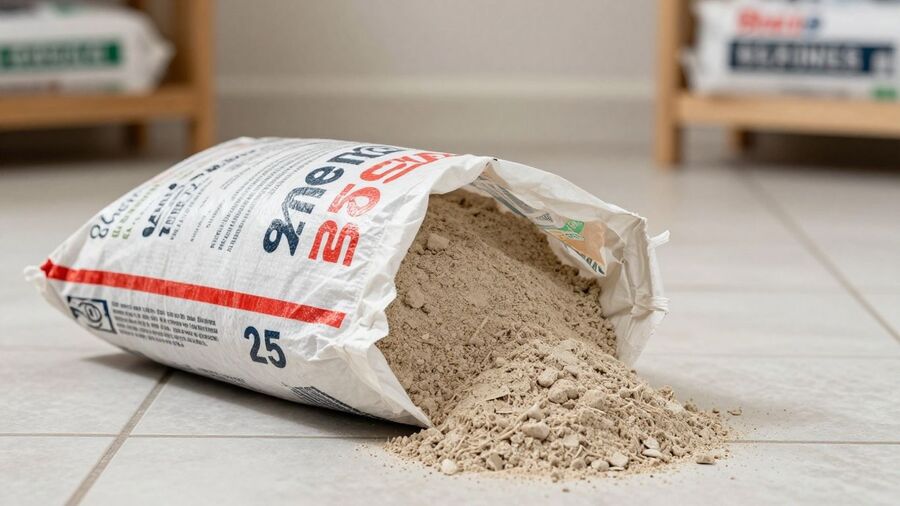
So, you’re wondering, how many square feet does a 25 lb bag of grout cover? It’s a common question when you’re getting ready to tile something. You don’t want to run out halfway through, but you also don’t want a bunch of leftover grout gathering dust. The answer isn’t a simple number because a few things change how much area that bag will actually cover. Let’s break it down so you can figure out what you need for your project.
Alright, so you’re wondering how much grout you’ll actually need for your tiling project, right? It’s not just a simple ‘one bag fits all’ situation, unfortunately. A few things really play a role in how far that bag of grout is going to stretch. Think of it like baking – the size of your pan and how thick you spread the batter makes a difference in how many servings you get.
The size of your tiles is a big one. Smaller tiles mean more grout lines overall for the same square footage. Imagine laying down a bunch of tiny mosaic tiles versus a few big format ones; you’re going to be filling a lot more little gaps with the smaller tiles. This means you’ll use more grout. On the flip side, larger tiles have fewer grout lines, so you’ll use less grout for the same area.
This is pretty straightforward: the wider the gap between your tiles, the more grout you’ll need to fill it. A standard grout line might be 1/8 inch, but if you’re going for a more rustic look with 1/4 inch or even 1/2 inch joints, you’re asking for a lot more material. It’s like filling a narrow crack versus a small trench – the trench takes way more filler.
How you lay out your tiles can also affect how much grout you end up using. A simple, straight grid pattern is pretty efficient. But if you decide on a diagonal layout or a staggered brick pattern, you’ll have more tile cuts around the edges and corners. All those extra cuts mean more grout lines to fill, especially in those tricky spots. It’s not a massive difference, but it can add up, so it’s something to keep in mind when you’re doing your calculations.
Don’t forget that grout depth matters too. If your tiles are thick and your grout lines are deep, you’ll need more grout to fill them completely. It’s not just about the width and length of the lines, but how far down they go.
So, before you grab that bag, take a moment to think about your tile size, how wide you want the gaps to be, and how you plan to lay them out. These factors are key to figuring out how much grout you’ll really need.
So, you’re wondering, how many square feet does a 25 lb bag of grout cover? It’s a common question, and the answer isn’t a simple one-size-fits-all number. Several things play a role in how far that bag of grout will stretch. Think of it like baking – the size of your cookie cutters and how thick you roll the dough both affect how many cookies you get from a batch of dough.
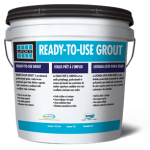
For standard cementitious grout, which is what most DIYers use for floors and walls, you’re generally looking at a coverage range. A typical 25 lb bag might cover anywhere from 60 to 80 square feet. This is a good starting point, but remember, it’s just an estimate. This figure usually assumes a common tile size, like 12×12 inches, and a standard grout line width, often around 1/8 inch. If you’re using something like LATICRETE READY TO USE Grout (14.8lb Pail), you’ll need to do a bit of math to scale that coverage to a 25 lb equivalent.
To get a more accurate idea of how much grout you’ll need, you’ve got to do a little homework. First, figure out the total square footage of the area you’re tiling. Then, consider your tile size and the width of the grout lines you plan to use. Wider grout lines mean you’ll use more grout. It’s also worth noting that different grout types have different coverage rates. For instance, epoxy grouts, like LATICRETE SPECTRALOCK 2000 IG Commercial Unit / 3.2 gal., often have different coverage expectations than standard cement-based ones.
Here’s a quick rundown of factors:
Let’s say you’re using smaller tiles, like 4×4 inch squares, compared to larger 12×12 inch tiles. You’ll have significantly more grout lines to fill with the smaller tiles, meaning you’ll need more grout. Similarly, if you decide on a wider grout joint – say 1/4 inch instead of 1/8 inch – that bag of grout won’t go as far. Always check the manufacturer’s packaging or website for their specific coverage estimates, as these can vary quite a bit between brands and product types. It’s always better to have a little extra than to run out halfway through the job.
So, you’ve picked out your tiles, and you’re ready to grout. But wait, not all grout is created equal, and this really matters when you’re trying to figure out how much you’ll need. The type of grout you choose can actually change how far a bag of material will stretch.
Most people are familiar with cementitious grout. It’s the standard stuff, usually coming in a powder you mix with water. It’s generally more affordable and easier to work with for beginners. However, it’s also more porous and can be prone to staining and cracking over time, especially in wet areas. Epoxy grout, on the other hand, is a bit of a different beast. It’s made from epoxy resins and a hardener, making it super durable, non-porous, and resistant to stains and chemicals. This makes it a great choice for high-traffic areas or places that get a lot of moisture, like kitchen backsplashes or shower floors. Because it’s a two-part system, you’re mixing liquids and powders, and it tends to be thicker. This difference in consistency means you’ll often use more epoxy grout to cover the same area compared to cementitious grout.
When you’re looking at a 25 lb bag of grout, the coverage can vary quite a bit. For a standard cementitious grout, you might see coverage estimates ranging from 60 to 80 square feet with a 1/8-inch grout joint. But epoxy formulas? They can sometimes use up to 1.5 times more material for the same job. This is why it’s super important to check the specific product you’re using. For instance, LATICRETE SPECTRALOCK® PRO Premium Translucent Grout is an epoxy-based product, and its coverage will differ from a basic cementitious mix. You’ll often find that the manufacturer provides a coverage chart or calculator on their website to help you nail down the exact amount needed for your project. It’s not just about the type, but the specific formula. Some are designed for wider joints, others for very narrow ones, and this all impacts how much material is used.
Always, always, always check the manufacturer’s instructions. They know their product best. For example, Laticrete SpectraLOCK PRO Premium Grout – Part A/B Liquids Only and Laticrete SPECTRALOCK PRO PREMIUM Grout – Part C Color Powder are components of a specific epoxy system. You need to follow their mixing ratios precisely. If you’re using something like Laticrete Spectralock 1 Pre-Mixed Grout – 1 Gallon, it’s a different ballgame altogether. This pre-mixed option is designed for convenience and might have its own coverage rates listed. You can find detailed coverage charts for many Laticrete products, which often break down estimates by tile size and joint width. It’s the most reliable way to get your numbers right. Don’t just guess; consult the packaging or the manufacturer’s website. It can save you a trip back to the store or, worse, running out mid-project.
The consistency and composition of grout directly influence how much area it can cover. Thicker, more durable grouts like epoxies often require more material per square foot than their cement-based counterparts. Always refer to the specific product’s coverage data provided by the manufacturer to avoid under or overestimating your needs.
Here’s a general idea, but remember to verify with the specific product:
So, you’ve figured out the tile size, the joint width, and maybe even the layout. That’s a huge step! But before you rush off to buy grout, let’s talk about a few other things that can really make or break your project.
It’s pretty common to underestimate how much grout you’ll actually use. Things happen, right? You might mix a bit too much, spill some, or maybe the grout consistency isn’t quite perfect on the first try. Always buy a little extra grout than your calculations suggest. A good rule of thumb is to add about 10-15% more. This buffer accounts for those inevitable little mishaps and also gives you a bit on hand for future touch-ups if needed. Running out of grout halfway through a wall is a real pain, trust me.
We often focus on the width of the grout line, but its depth matters too. If you’re using thicker tiles, or if your tile setter didn’t get the backer board perfectly flush, you might have deeper grout joints. This means you’ll need more grout to fill those voids completely. Think of it like filling a trench – a deeper trench needs more dirt. Most standard tile installations have a grout depth that’s roughly the thickness of the tile itself, but it’s worth checking, especially with natural stone or uneven surfaces. Getting this right means a more durable and professional-looking finish.
Manufacturers are usually pretty good about providing coverage charts for their products. These charts are super helpful because they take into account the specific density and formulation of their grout. You’ll typically find them on the bag itself or on the manufacturer’s website. They often look like a table, showing how many square feet a certain weight of grout (like a 25 lb bag) will cover based on different tile sizes and joint widths. It’s a good idea to cross-reference these charts with your own calculations. For example, a chart might show that a 25 lb bag covers 60-80 sq ft for a 12″x12″ tile with a 1/8″ joint. If your project is 80 sq ft, you’d likely need one bag, maybe two if you’re being extra cautious or have a complex layout. These charts are a great tool, especially when you’re dealing with a large area, like a floor that might need a professional grout cleaning system.
Here’s a simplified look at how a chart might break down:
| Tile Size | Joint Width | Approx. Coverage (25 lb bag) | Notes |
| 12″ x 12″ | 1/8″ | 60-80 sq ft | Standard for many floor tiles |
| 12″ x 12″ | 1/4″ | 40-60 sq ft | Wider joints use more grout |
| 6″ x 6″ | 1/8″ | 30-50 sq ft | Smaller tiles mean more grout lines |
| 18″ x 18″ | 1/8″ | 70-90 sq ft | Larger tiles mean fewer grout lines |
Remember, these are just estimates. Your actual coverage might vary a bit.
Alright, so you’ve got your tiles picked out, and you’re ready to get down to the nitty-gritty of figuring out just how much grout you’ll actually need. It sounds simple, but there are a few steps to get it right, so you don’t end up with a half-empty bag or, worse, running out when you’re only halfway done. Let’s break it down.
First things first, you need to know the total square footage you’re working with. This is pretty straightforward: just measure the length and width of the area you’re tiling and multiply them together. For example, if you’re tiling a floor that’s 10 feet long and 8 feet wide, your total area is 80 square feet (10 ft * 8 ft = 80 sq ft). This is your starting point for all the grout calculations.
Now, this is where it gets a little more detailed. We’re not just looking at the total floor area; we need to figure out the actual area that the grout will fill – the gaps between the tiles. This depends on a few things:
Manufacturers often provide charts for this, which are super helpful. For instance, a common estimate is that a 25 lb bag of standard cementitious grout might cover around 60-80 square feet for 12″x12″ tiles with a 1/8″ joint. But remember, this is just a ballpark figure. If your tiles are smaller or your joints are wider, that coverage number will drop significantly.
It’s always better to overestimate slightly than to underestimate. Having a little extra grout on hand is way less stressful than having to make a last-minute trip to the store, especially if it’s late in the day or a weekend.
To get really precise, you’ll want to think about the volume of grout needed. This means considering not just the area of the grout lines but also their depth. Thicker tiles mean deeper grout lines, and you’ll need more material to fill them completely. The formula generally looks like this: Grout Volume = Grout Area × Grout Depth. You can find specific calculators online that help with this, taking into account your tile dimensions, joint width, and depth. This is especially important if you’re using a different type of grout, like epoxy, which might have different coverage rates. For large projects, having the right cleanup tools, like a specialized grout wash bucket with durable sponges that can last for thousands of square feet, can make a big difference in efficiency. check out accessories.
Remember, these calculations are your best guess. Always factor in a little extra for waste, mistakes, or unexpected issues. It’s better to have a bit left over than to run short.
Let’s break down a common scenario: tiling a 10-foot by 8-foot floor. That’s a total area of 80 square feet. If you’re using standard 12-inch by 12-inch tiles (which cover 1 square foot each) and keeping your grout lines to a neat 1/8 inch, a 25 lb bag of typical cementitious grout should get you pretty far. For this setup, you’re likely looking at needing just one bag. It’s a good starting point, but remember, this is a baseline.
Now, what if you decide to go with a diagonal tile layout instead of the standard grid? This looks fancy, I get it. But all those angled cuts mean more tile waste and, consequently, more grout lines to fill. For that same 80 sq ft floor, switching to a diagonal pattern could push your grout needs up by about 10-15%. So, that one bag might not quite cut it anymore; you might need closer to 1.1 or 1.15 bags. It’s not a huge jump, but it’s enough to consider when you’re buying your materials.
Smaller tiles mean more tiles to cover the same area, and that translates to more grout lines. Imagine using 4-inch by 4-inch tiles on that 80 sq ft floor. You’ll have way more grout lines compared to the 12×12 tiles. While a 25 lb bag might cover 60-80 sq ft with larger tiles and wider joints, it could be closer to 40-50 sq ft with smaller tiles and narrower joints. This means for our 80 sq ft example, you might need two bags of grout instead of just one. It really highlights how tile size and the resulting grout line density play a big role.
Always double-check the manufacturer’s coverage estimates for the specific grout you’re using. These numbers are helpful guides, but real-world application can vary based on how thick you spread the grout and how much you clean off the tiles during the process.
Here’s a quick look at how tile size and joint width can affect coverage for a 25 lb bag of cementitious grout:
| Tile Size | Joint Width | Approximate Coverage (sq ft) |
| 12″ x 12″ | 1/8″ | 60 – 80 |
| 4″ x 4″ | 1/8″ | 40 – 50 |
| 12″ x 24″ | 3/16″ | 130 – 140 |
| 6″ x 6″ | 1/4″ | 30 – 50 |
Alright, so we’ve gone over the nitty-gritty of grout coverage. Remember, that 25 lb bag of standard cement grout usually covers somewhere between 60 to 80 square feet. But don’t just take that number and run! Your tile size, how wide those grout lines are, and even the pattern you’re laying your tiles in can change things up. Epoxy grout tends to be a bit thicker, so you might need more of that. And seriously, always grab a little extra – maybe 10% more – just in case of spills or mistakes. It’s way better to have a bit left over than to run out halfway through your project. Keep these tips in mind, and you’ll be good to go for your next tiling job.
The amount of grout you’ll need really depends on a few key things. Think about the size of your tiles – smaller tiles mean more grout lines. Also, how wide you make those lines (the grout joint width) is a big deal. If you have wider gaps, you’ll use more grout. The way you lay out your tiles, like a diagonal pattern, can also change how much grout you need because it means more cuts and more lines to fill.
When you use bigger tiles, like 12×12 inches, you have fewer grout lines compared to using smaller tiles, such as 4×4 inches. This means that for the same total area, smaller tiles will need more grout because there are more spaces between them to fill.
Absolutely! The width of the space between your tiles, called the grout joint, is super important. If you’re going for a modern look with very thin grout lines, say 1/16 or 1/8 of an inch, you’ll use much less grout. But if you prefer a rustic style with wider gaps, like 1/4 or 1/2 inch, you’ll need a lot more grout to fill those bigger spaces.
Cement-based grout is the most common type and is usually what people mean when they just say ‘grout.’ It’s good for most everyday jobs. Epoxy grout, on the other hand, is tougher and more resistant to water and stains. It’s often used in places like kitchens and bathrooms where there’s a lot of moisture. Because epoxy grout is thicker, you might need more of it compared to cement grout for the same job.
Yes, it’s always a smart idea to get a little extra grout, usually about 10-15% more than your calculation suggests. This extra amount is for unexpected things like spills during mixing, mistakes you might make while applying it, or if you need to do a small repair later on. It’s better to have a bit left over than to run out halfway through your project!
To get a good estimate, first, find the total square footage you’re tiling. Then, consider your tile size and the width of the grout lines you’ll be using. Most grout bags will tell you the estimated coverage area for a 25 lb bag, often listing a range like 60-80 square feet. You can use this, along with charts from the grout manufacturer, to get a close number. Remember to also think about your tile layout and buy a little extra just in case.

Welcome to Tile Pro Depot! We established this site to service the specific needs of the tile installation professional. Tile installation tools, tile setting materials, premixed grout and more tile installation products online at Tile Pro Depot.