Military Discount
-

-

-
0

Walk into a hardware store with a damp basement and you’ll leave overwhelmed. There are sprays, membranes, sealants, crystals, cements, and paints — all promising to fix your water problem for good. The truth is, some of these products are genuinely excellent. Others are overpriced temporary patches. And a few of them will make you feel like you’ve solved something while the water quietly keeps doing what it was doing. Knowing which is which matters a lot before you spend a dollar on anything.
The most effective waterproofing materials aren’t necessarily the most expensive or the most prominently marketed. They’re the ones matched correctly to the specific problem — applied at the right point in the building envelope, by someone who understands why the water is getting in. That last part is harder than it sounds.
This is the black plastic sheeting you see going up against foundation walls on any serious waterproofing job. High-density polyethylene pressed into a pattern of raised dimples — those bumps create an air gap between the sheet and the wall, so water that migrates through the concrete has somewhere to travel downward rather than into the room. It collects at the base and gets directed to a drainage channel and sump pump.
HDPE is chemically inert, doesn’t degrade in soil contact or moisture, handles freeze-thaw cycles without becoming brittle, and has a service life measured in decades not years. It’s also fully recyclable. The team at Aquatech Waterproofing in Oakville regularly specifies dimple membrane as part of both interior and exterior systems because it performs reliably across a wide range of foundation types and conditions — not because it’s trendy, but because it works.
Applied as a slurry or coating directly onto concrete, crystalline products work through chemistry rather than by creating a barrier on top of the surface. The active compounds react with moisture and free lime inside the concrete to grow insoluble crystals within the pores and capillary channels of the material — effectively blocking water at the molecular level rather than just on the face of the wall.
What makes crystalline technology genuinely impressive is its self-sealing behaviour. If a new hairline crack develops in a treated section later on, the crystalline reaction reactivates wherever moisture is present and fills the new void. For poured concrete foundations, this is one of the most durable treatments available. Once it’s in, it keeps working without any maintenance or reapplication.
Not every basement water problem needs a full drainage system. A specific crack letting in water at a predictable point is often best handled with targeted injection — cheaper, faster, and less disruptive than a perimeter solution.
Epoxy injection bonds the two faces of a crack back together with structural adhesion — the repaired zone actually ends up stronger than the original concrete. It’s the right choice where you want to restore structural integrity alongside stopping the leak. Polyurethane foam expands as it cures, filling irregular voids and conforming to the crack geometry as it sets. It’s more flexible than epoxy and better suited to cracks with active water movement at the time of repair, since epoxy needs a dry surface to bond correctly.
These products form a film over the concrete surface. In the right situation — a basement that’s damp rather than actively leaking, where the goal is reducing surface moisture transmission — a quality masonry sealer is a reasonable choice. But most homeowners reach for waterproof paint when they have actual water intrusion, not just surface humidity. Paint cannot hold back hydrostatic pressure. Water under pressure will work its way behind the film, and when it does, you’ll find the paint peeling off the wall in patches. Bubbling or flaking basement paint is almost always a symptom of water coming through the wall — not a painting problem.
Fast-setting and genuinely useful for one specific purpose: stopping an active drip while you figure out what comes next. It can be pressed into a crack even while water is flowing through. What it cannot do is address the hydrostatic pressure driving that water toward your foundation. Used as a first response, it’s a reasonable tool. Used as the final answer, it buys you one season — maybe two — before the water finds another way.
A dimple membrane installed without a proper outlet to a drainage channel is just plastic attached to a wall. Crystalline coating applied over a painted surface can’t penetrate the concrete where it needs to react. Crack injection done without understanding why the crack formed leaves you sealing one entry point while the next one opens up nearby.
The best material in the wrong application underperforms. The right material, correctly installed to address the actual source of water entry, outperforms everything. That’s the argument for getting a professional assessment before you buy anything — not because contractors are always right, but because diagnosing the problem correctly is genuinely the hardest part of solving it.
The most effective waterproofing material is the one chosen for your specific problem — not the one with the best packaging or the highest price. Understanding what you’re dealing with first makes everything that follows cheaper, faster, and more likely to actually work.
You can find a variety of professional-grade waterproofing materials for basements and other wet areas on Tile Pro Depot. They primarily stock Laticrete products, which are widely recognized for moisture management and vapor reduction in tile and stone installations.
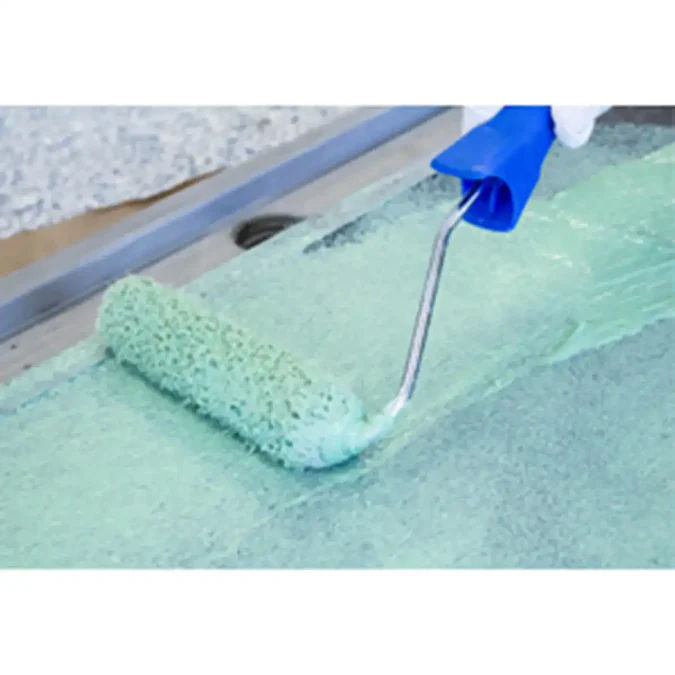
These are popular for basement projects because they are easy to apply with a roller or brush and form a seamless, flexible barrier.
Sheet membranes provide a consistent thickness and are excellent for vapor management on concrete basement floors.
To ensure a basement is fully watertight, these auxiliary products are used to seal joints and penetrations:
Welcome to Tile Pro Depot! We established this site to service the specific needs of the tile installation professional. Tile installation tools, tile setting materials, premixed grout and more tile installation products online at Tile Pro Depot.