Military Discount
-

-

-
0

Written by Mitchell Moss | Tile Pro Depot | Last reviewed October 14, 2026
Quick Answer: Published guides put tile labor at roughly $5 to $15 per square foot (TaskRabbit, Block Renovation) or $8 to $20 (HomeGuide), and the fully installed price, with tile and materials, at anywhere from about $7 to $50. The spread is real, not sloppy: tile type, size, layout, the floor underneath and whether the area is a shower all move the number. Ask for an itemized quote that separates labor, prep and materials, because prep is where most surprises come from.
“Tile installation” covers very different jobs. Setting straight-lay ceramic in an empty room is quick work. A herringbone porcelain floor over an uneven subfloor, or a shower that needs waterproofing, takes far more time per square foot. This guide lays out the published ranges, shows how each cost factor changes the price, and walks through how an installer turns those factors into a quote.
The national cost guides we checked in October 2026 do not agree on a single number, and that is worth knowing before you compare your own quotes. TaskRabbit puts standard tile labor at $5 to $15 per square foot, with a national average hourly rate of $54 and city averages ranging from about $52 in Los Angeles to $80 in the San Francisco Bay Area. Block Renovation also gives $5 to $15 in most markets, starting nearer $10 in high-cost coastal cities. HomeGuide, whose data HGTV cites, reports labor at $8 to $20 and a total installed cost of $10 to $50. ConsumerAffairs gives a labor range of $1.40 to $12.50 and a total of $7 to $25.
The differences come from what each guide counts. Some include prep and demolition in the labor figure and others price them separately, and the tile itself can change the total by tens of dollars per square foot. Treat the guides as a bracket. Your installer’s minimum charge, local labor market and the condition of your floor will matter more than any national average.
Most quotes start with a base labor rate and then adjust it for the items below. Dollar figures come from the guides above and are national averages, not local quotes.
| Factor | How it changes the cost per square foot |
| Tile type | HomeGuide lists installed ranges of about $12 to $40 for ceramic, $15 to $50 for porcelain and $10 to $50 for stone. Porcelain is denser and slower to cut; natural stone needs careful handling and sealing. |
| Tile size | Large-format tile needs a flatter substrate (Block Renovation cites flat to within 1/8 inch over 10 feet) and more care to set without lippage. Mosaics take longer per square foot because of the sheets and grout lines. |
| Layout pattern | A straight lay is the base price. Diagonal, herringbone and other patterns add cutting time and waste. |
| Surface | Showers, walls and backsplashes involve detail work and often waterproofing, so they commonly price higher than an open floor. Confirm the rate for each zone separately. |
| Existing floor | Removing and hauling away old tile runs about $2 to $7 per square foot (HomeGuide) or roughly $4 (ConsumerAffairs). |
| Subfloor | Leveling adds about $2 to $8 per square foot and subfloor repair about $2 to $10 (ConsumerAffairs). These are often discovered only after demolition. |
| Waterproofing | Showers and wet areas need a membrane, which adds material and labor. |
| Access and minimums | Upper floors, tight spaces and parking add time, and some installers charge a minimum fee for small jobs (HomeGuide). |
Ceramic is the easiest to cut and set, so it tends to sit at the low end of labor rates. Porcelain is harder and wears blades faster, which slows cutting. Natural stone such as marble needs matched layouts, careful handling and sealing, so it costs more to install.
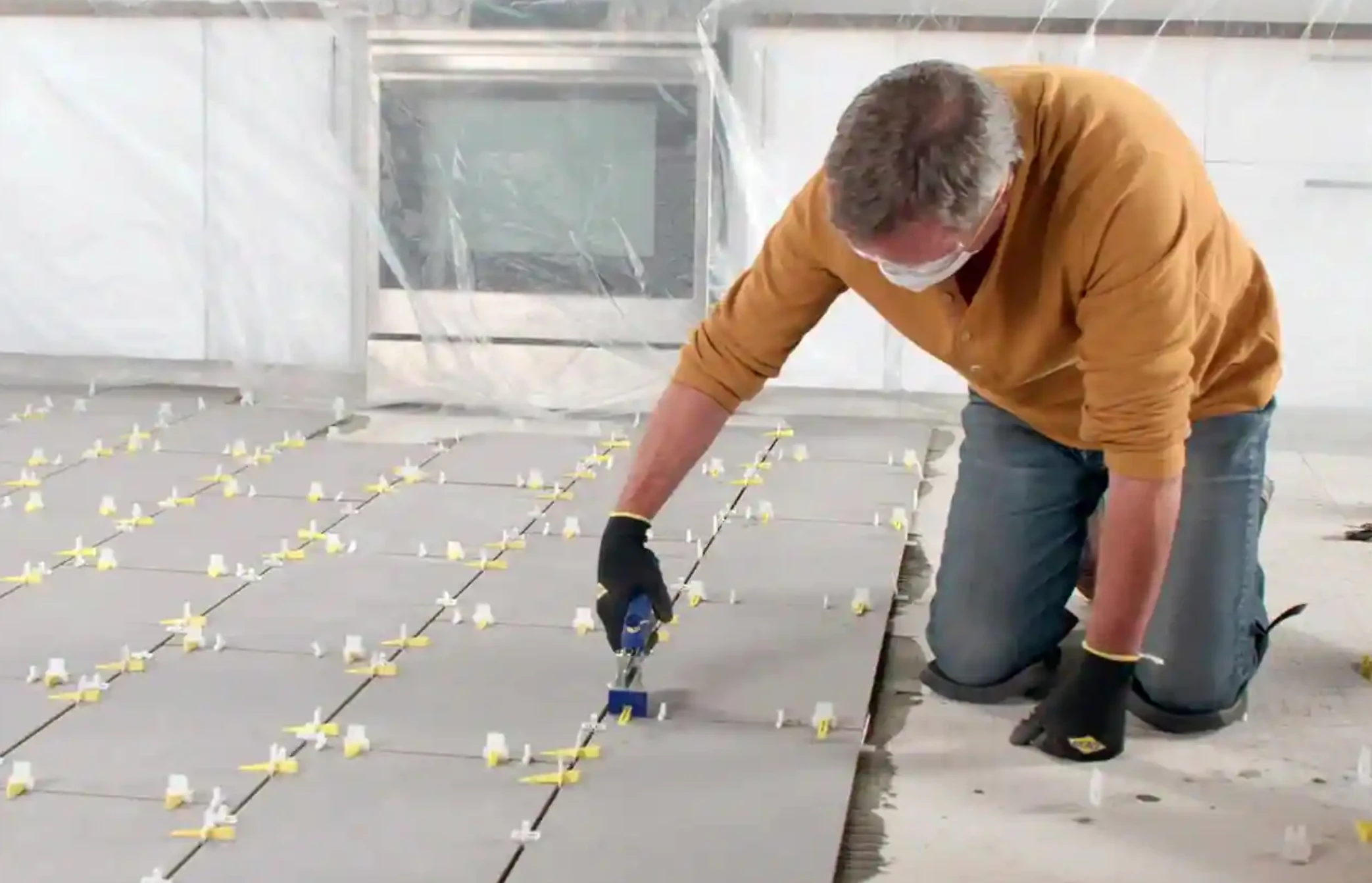
Size matters as much as material. A large format tile covers ground quickly, but it shows every high spot in the floor, so installers usually back-butter the tile and may bring a second person to move it. Block Renovation notes that self-leveling compound to flatten a floor for large-format tile can add $500 to $1,500 before the first tile goes down. For very thin large-format porcelain, a wedge-style leveling system such as the DTA Wedge Lippage Leveling System for Large Format Thin Tile is designed to control lippage in tile as thin as 1.5 mm. Mosaics sit at the other end. Block Renovation puts mosaic and penny tile at $40 per square foot installed and up, with an example install rate of $25 per square foot, because each sheet is small and grouting takes time.
Prep is where quotes surprise homeowners. Removing an old floor means breaking it out, scraping off the old thinset and hauling away the debris. If the floor is uneven it must be flattened, and our guide to using self-leveling underlayment walks through how that pour is prepped and placed. A product such as LATICRETE NXT LEVEL PLUS, a cement-based underlayment that can be placed from 1/8 to 1-1/4 inch in a single pour, is the kind of material that line item covers. Subfloor repair is a separate line again, and an installer cannot price it accurately until the old floor is up.
Wet areas add their own layer. A shower needs a waterproof membrane on the walls and floor before tile, and the floor has to slope to the drain. That is a large part of why shower tile costs more per square foot than the bathroom floor beside it. If you want to see what that work involves, we cover the main options in how to waterproof a shower floor before tiling. A liquid-applied option such as LATICRETE HYDRO BAN Liquid Waterproofing Membrane goes on without fabric and cures into a thin film that tile is set directly onto, which is one reason installers may price it differently from sheet systems.
The numbers below are illustrative, not a quote. Say the floor is 8 by 10 feet, or 80 square feet. The tile order allows about 10% for cuts on a straight lay, so 88 square feet of tile; a diagonal or herringbone pattern would need more. If the installer’s labor rate for this tile and layout is $9 per square foot, labor is $720 (labor is often charged on the installed area rather than the waste). Removing the old floor at $4 per square foot adds $320. If the floor also needs leveling at $2 to $8 per square foot, that is another $160 to $640. Thinset, grout, backer board or membrane, sealer and the tile itself are priced on top. If the total labor falls below the installer’s minimum charge for a day on site, the minimum applies instead.
So the same bathroom might be $1,040 in labor and demolition on a sound subfloor, or $1,200 to $1,680 once leveling is needed, before a single tile is bought. That gap is why itemized quotes matter.
Once the old floor comes up and the subfloor needs repair, the extra square-foot charge should go onto a written change order before work continues. Many contractors keep the measurements, signed estimate, deposit and any revised estimates together, sometimes in a flooring CRM, so that the final invoice matches what the customer approved. As a homeowner, you can get the same protection without any software: ask that every added item be priced and signed before it is done, and keep your copy of the original quote.
Measure each area and note which surfaces get tile: floor, walls, backsplash or shower. Choose the tile before asking for quotes, because size and material change the labor rate. Then ask each installer what the price includes: demolition, disposal, leveling, backer board or membrane, setting materials, grout, sealing and cleanup. A low quote that leaves out prep often ends up the most expensive.
Get at least two quotes and compare them line by line, not by the bottom number. If an installer prices hourly, ask for an estimated number of hours and what happens if the job runs over.
Labor alone is commonly quoted at $5 to $15 per square foot, with some guides reporting up to $20. Fully installed, with tile and materials, published figures run from about $7 to $50 per square foot. Large-format tile, stone, patterns, walls and showers sit toward the upper end.
Both are used. Per-square-foot pricing is more common for floors, where it is easier to compare quotes. Hourly pricing, for which TaskRabbit reports a national average of $54 an hour, shows up on small or irregular jobs. Ask which method applies and what is included.
There is no separate national rate for 12×24 tile, and the guides we checked do not publish one. In practice, large-format tile can cost more to install because the floor must be flatter and each tile takes more care to set without lippage. If your floor is uneven, expect leveling to appear on the quote.
It depends on tile size, layout, the surface and how much prep is needed. A straight-lay floor in large tile goes far faster than a mosaic shower wall, and prep can take as long as setting. Ask the installer for a schedule based on your specific room rather than a general figure.
Most increases come from conditions found after demolition, such as a damaged subfloor or a floor that needs leveling, or from items the quote did not include. A written, itemized quote and a signed change order for added work avoid most disputes.
If you can, yes. Tile size, material and pattern change the labor rate, so quotes based on the actual tile are more accurate than quotes based on a guess.
This article is general information and is not a quote, a contract or professional advice. The dollar figures are national averages published by third parties and vary widely by region, installer, tile and site conditions, and they change over time. The worked example is illustrative only. Get written, itemized quotes from licensed or qualified local installers, and follow the tile and setting-material manufacturers’ instructions and local building codes for your project. Tile Pro Depot is not responsible for decisions made or costs incurred on the basis of this article.

Mitchell Moss works with Tile Pro Depot and contributes practical content for professional tile installers, remodelers, and serious DIY users. His articles focus on tile installation tools, setting materials, waterproofing systems, grout, underlayments, and jobsite techniques. Through the Tile Pro Depot blog, he helps readers better understand product applications, compare installation approaches, and make informed material choices using manufacturer guidance, industry standards, and practical considerations that can affect the durability and performance of a tile installation.