Military Discount
-

-

-
0

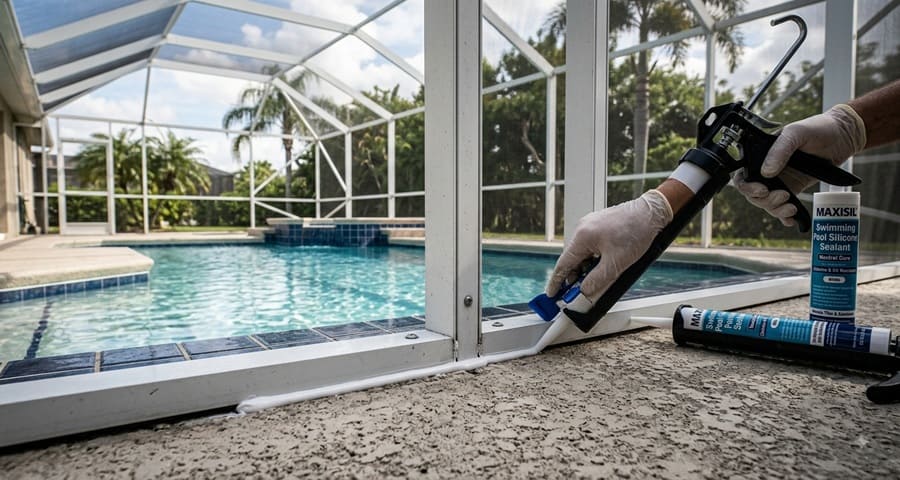
Quick answer: The best sealants for pool screen enclosure bases are 100% neutral-cure silicone or hybrid elastomeric formulas specifically engineered to resist chlorine, UV exposure, and constant moisture. Top options include Maxisil Swimming Pool Silicone Sealant, Laticrete LATASIL, and Laticrete HYDRO BAN Adhesive & Sealant.
The base of a pool screen enclosure takes a beating every single day. Constant humidity, chlorine splash, saltwater exposure, and ground movement from thermal expansion — all concentrated at one narrow joint where aluminum framing meets concrete, tile, or fiberglass. That joint is your first line of defense against water intrusion, pest entry, and the kind of slow structural deterioration that pool environments accelerate faster than almost any other setting.
The problem? Most people reach for whatever caulk is on the shelf at their local hardware store. Standard household silicones are formulated for bathrooms and kitchens — not for the punishing chemistry of a pool environment. Consumer-grade products often fail within a single season when exposed to chlorine, UV radiation, and the relentless wet-dry cycles that pool screen bases endure.
Choosing the right pool screen sealant from the start saves time, money, and the frustration of re-doing the job six months later. This guide covers exactly what to look for in a pool caulk, the three best products for the job, a step-by-step application guide, and where to source professional-grade materials.
Not all “waterproof” labels are created equal. A sealant rated for bathroom use and a sealant engineered for constant pool chemical exposure are fundamentally different products — even if both claim to be waterproof silicone.
The environment around a pool screen base creates a unique combination of stressors:
Given these demands, the properties to prioritize when selecting a caulk for a pool screen base are:
Maxisil Swimming Pool Silicone Sealant is the only product in this roundup purpose-built for aquatic environments — specifically engineered to perform under conditions of constant water immersion. That distinction matters when you’re sealing a joint that never fully dries.
Key features:
Best use case: Sealing expansion joints, waterline tile repairs, skimmers, drains, and — critically — the base of pool screen enclosures where tile or concrete meets aluminum framing.
Maxisil Swimming Pool Silicone Sealant is not typically available at big-box stores. It’s stocked through professional distributors like Tile Pro Depot, where you’ll also find detailed technical specifications and product support.
Shop Maxisil Swimming Pool Silicone Sealant at Tile Pro Depot
Laticrete LATASIL is the professional-grade workhorse of silicone sealants — widely trusted by tile contractors for both interior and exterior applications where long-term performance is non-negotiable.
Key features:
Best use case: Movement joints and plane changes at the base of pool screen enclosures, particularly in commercial or high-traffic settings. LATASIL is especially well-suited for projects where long-term durability and a color-matched finish are both priorities.
Shop Laticrete LATASIL at Tile Pro Depot
Laticrete HYDRO BAN Adhesive & Sealant is the dual-purpose option — particularly valuable when the pool screen base involves HYDRO BAN waterproofing components, or when both bonding strength and sealing performance are needed in a single product.
Key features:
Best use case: Bonding HYDRO BAN prefab components or sealing joints at the screen base where a hybrid adhesive-sealant outperforms a standard caulk. Rated 5 stars by customers for creating a clean, durable sealed joint.
Shop Laticrete HYDRO BAN Adhesive & Sealant at Tile Pro Depot
| Maxisil Pool Silicone | Laticrete LATASIL | Laticrete HYDRO BAN | |
| Formulation | 100% RTV neutral-cure silicone | 100% neutral-cure silicone | Hybrid elastomeric adhesive/sealant |
| Best Substrate | Stone, tile, fiberglass, concrete | Tile, stone, concrete, aluminum | Concrete, cement board, polystyrene |
| Pool Chemical Resistance | ✅ Excellent | ✅ Excellent | ✅ Good |
| Mold Resistance | ✅ Built-in fungicides | ✅ Anti-microbial technology | ✅ Yes |
| Color Options | 9 UV-stable colors | 40+ colors + clear | Limited |
| Best For | Aquatic/immersion environments | Movement joints, commercial projects | Dual bonding + sealing applications |
Even the best pool screen sealant will fail prematurely if applied incorrectly. Follow these five steps for a clean, long-lasting result.
Step 1 — Surface prep: Remove all old caulk using a utility knife or caulk removal tool. Clean the joint thoroughly to eliminate dirt, grease, algae, and chemical residue. Allow the surface to dry completely before proceeding.
Step 2 — Cut and load the cartridge: Trim the nozzle at a 45° angle — size the opening to match your joint width. Load the cartridge into a caulking gun and puncture the inner seal.
Step 3 — Apply in a continuous bead: Maintain steady, even pressure as you draw the gun along the joint in one smooth pass. Avoid stopping and starting, which creates uneven coverage and weak spots.
Step 4 — Tool the joint: Immediately after application, smooth the bead with a wet finger or sealant finishing tool. This compresses the sealant into the joint and creates a clean, professional finish.
Step 5 — Allow full cure: Do not expose the joint to water until the sealant has fully cured. Follow the manufacturer’s cure time guidelines — Maxisil and LATASIL both require full cure before water contact.
Pro tip: Apply painter’s tape to both sides of the joint before you start. Remove it immediately after tooling for perfectly clean edges every time.
Regarding maintenance: inspection frequency depends on the product and environment, but a good rule of thumb is to check pool screen joints annually — especially after winter — for cracking, shrinkage, or mold growth. Re-caulking every few years is far cheaper than addressing water damage or pest intrusion.
The products covered in this guide are professional-grade materials — they’re not typically found on the shelves of standard hardware stores. Tile Pro Depot stocks a curated range of contractor-quality caulks and sealants, including Maxisil, Laticrete LATASIL, and Laticrete HYDRO BAN, with full product specifications, technical data sheets, and knowledgeable support before and after your purchase.
Tile Pro Depot offers nationwide shipping and is a trusted source for tile installation professionals across the country. Contractors who purchase regularly can also take advantage of the Frequent Buyer Program, which rewards repeat purchases with a $25 credit for every $500 spent.
Sealing the base of a pool screen enclosure is a small job with outsized consequences if done wrong. A failing joint lets in water, pests, and humidity — all of which compound over time into costly structural problems. The right silicone sealant, correctly applied, holds up for years.
For aquatic environments and constant immersion, Maxisil Swimming Pool Silicone Sealant is the top pick. Laticrete LATASIL is the go-to for movement joints and commercial-grade performance. And Laticrete HYDRO BAN Adhesive & Sealant is the smart choice when you need bonding and sealing in one product.
Shop professional pool-grade sealants at Tile Pro Depot and get the right product for the job — the first time.
Browse the full Caulks & Sealants range at Tile Pro Depot →
For a concrete pool screen base, a 100% neutral-cure silicone sealant is the best choice. Neutral-cure formulas are safe for concrete and porous substrates, unlike acetoxy-cure silicones, which can cause surface damage. Maxisil Swimming Pool Silicone Sealant and Laticrete LATASIL are both strong options designed for this specific application.
Standard silicone caulk is not recommended for pool environments. Regular silicone is formulated for interior use and lacks the chemical resistance needed to withstand chlorine, saltwater, and constant UV exposure. Consumer-grade caulks often fail within a single season in pool conditions. Use a product specifically engineered for aquatic or pool environments.
Inspect the sealant joint annually, particularly after winter. The re-caulking frequency depends on the product used and the severity of the environment — but a high-quality silicone sealant in a pool setting typically lasts several years before requiring replacement. Any cracking, shrinkage, discoloration, or visible mold growth is a sign that re-caulking is needed.
Neutral-cure silicone cures by releasing an alcohol byproduct — unlike acetoxy-cure silicone, which releases acetic acid. The acid in acetoxy-cure products can corrode metal framing, stain natural stone, and damage sensitive substrates. Around pool screen enclosures, where aluminum framing, concrete, and natural stone are common, neutral-cure silicone is the only safe choice.
Professional-grade pool sealants like Maxisil Swimming Pool Silicone Sealant and Laticrete LATASIL are available through specialty tile and installation suppliers. Tile Pro Depot carries these products online with nationwide shipping, full technical specifications, and customer support to help you choose the right sealant for your specific application.

Welcome to Tile Pro Depot! We established this site to service the specific needs of the tile installation professional. Tile installation tools, tile setting materials, premixed grout and more tile installation products online at Tile Pro Depot.