Military Discount
-

-

-
0

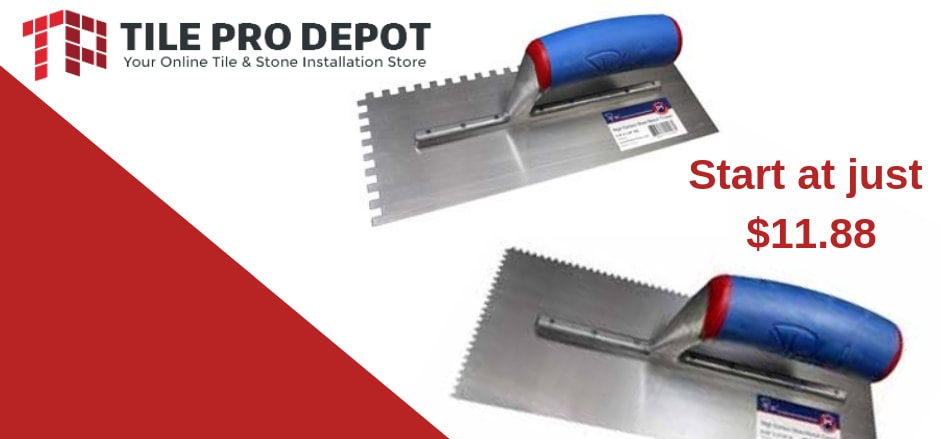
When installing tile, it’s important to have the correct tools. Having the right tools not only makes the installation easier but helps it go faster – and who doesn’t want to save themselves time and effort?
Trowels are essential tools for various construction and renovation projects. But, choosing the right trowel size can be overwhelming, especially if you’re not familiar with the types and sizes available. Using the wrong size can affect the quality of your project, lead to uneven surfaces, and can even damage your materials. We’ll discuss how to select the best trowel size for your project.
Choosing the correct trowel size is essential as it directly impacts the coverage, bonding effectiveness, and appearance of the application. Using the wrong trowel size may result in improper mortar application, leading to issues like poor adhesion or an uneven finish.
Selecting the best trowel size for your project can ensure a successful and efficient installation. With so many different trowel sizes available on the market, it can be overwhelming to determine which one is most suitable for your particular job. The right trowel size plays a crucial role in achieving proper coverage, minimizing waste, and maximizing adhesive bonding.
In this article, we will provide you with useful guidance on how to select the best trowel size for your next project. Whether you’re working with ceramic tiles or installing natural stone, we’ll cover all the essential factors that need to be considered when choosing the ideal trowel size. So let’s dive in and explore the world of the best tile trowel size!
Tiling is one of the most important aspects of construction work. Be it your bathroom, kitchen, or any other part of your home, tiling plays a crucial role in enhancing the overall look and feel of your space. However, selecting the right trowel size can be an overwhelming task for many people. A trowel is a handheld tool used to spread and level adhesives on surfaces before laying tiles. The size of the trowel plays an essential role in determining how much adhesive will be applied to each tile.
The trowel size is typically determined by the type of material being used (e.g., thinset, adhesive, mortar) and the size of the tile or surface to be covered. Refer to the manufacturer’s guidelines or technical data sheets for recommended trowel sizes based on the project requirements.
Firstly, consider the Size of Your Tile – One of the essential factors to consider when selecting a trowel size is the size and shape of your tile. For mosaics and wall tiles up to 4 1/2″, use a 3/16″ to 1/4″ V-notched trowel; small, lightweight tiles need smaller notches so adhesive does not squeeze into grout lines.
1. Understand the types of trowels:Before you can select the right trowel size, you must understand the different types of trowels. The most common types include the notched trowel, the margin trowel, and the finishing trowel. Notched trowels are used to spread adhesive, margin trowels are used for smaller jobs, and finishing trowels are used for smoothing surfaces.
2. Know the materials:Different trowel sizes are used for different materials. For example, small tiles require a smaller notched trowel of around 3/16 inches, whereas larger tiles will require a larger notched trowel of around 1/2 inch. When working with thinner materials such as wood veneers, use a margin trowel, while finishing trowels work best for finishing drywall and concrete surfaces.
3. Determine the thickness of the product:The thickness of the product you’re using plays a significant role in selecting the right trowel size. As a rule of thumb, larger and thicker tiles require larger notches, while thinner products need a smaller notched trowel to avoid pushing too much adhesive under the material.
4. Consider the pattern:If you’re using a trowel to lay out tiles or other materials in a specific pattern, you should consider the pattern when selecting the trowel size. Some patterns require larger spaces between the tiles, which means you’ll need a trowel with larger notches. Similarly, some patterns require smaller spaces, which means you’ll need a trowel with smaller notches.
5. Experiment with different sizes:Ultimately, the right trowel size for your project will depend on several factors, including the experience of the contractor, the type of job, and the material. Trial and error can be useful, and it’s often best to start with a smaller trowel and work your way up to a larger size. This method offers more control over the amount of adhesive or mortar used when laying out materials.
When it comes to tiling, the right trowel size is crucial for achieving a perfect finish. Different types of troweling tools are available in the market, each designed to cater to specific needs and applications. Choosing the right type and size of the trowel is essential as it can directly impact the durability and longevity of your tile work.
One popular type of trowel is the V-notched trowel, which has teeth that are shaped like a V. This type of tool creates small ridges on the adhesive or mortar bed, allowing better adhesion between tiles and substrate. Another common variety is the square-notch trowel that forms squared notches instead of v-shaped ones, unlike a U-notched trowel with its half-moon notch that leaves rounded ridges in thinset mortar. This style works well with larger format tiles as it distributes adhesive more evenly over a broader surface area. Those rounded ridges spread more easily under pressure, which helps embed tile and reduces trapped air. Square-notch trowels may leave slightly more mortar under the tile than U-notched options.
RTC Euro Notch Trowel (11″ x 5″)Primo High Carbon Steel Notch Trowel with Wood HandlePrimo Euro Notch Carbon Steel Notch Trowel with Soft Grip Handle (weld riveted)Primo High Carbon Steel Notch Trowel with Soft Grip HandleRTC Stainless Margin & Bucket TrowelsPrimo Wood Handle Margin Trowel
So, how do you pick the right one? It’s not just about grabbing the first trowel you see. You’ve got to consider a few things. The size of your tile is a big one – bigger tiles generally need a trowel with larger notches to spread enough adhesive. The type of tile matters too; some tiles are more porous and might need a different approach. And don’t forget the surface you’re tiling onto, known as the substrate. Is it perfectly flat, or a bit uneven? That can influence your choice. Here’s a general idea to get you started:
| Tile Size (Approximate) | Recommended Trowel Notch Size |
|---|---|
| Up to 6″ x 6″ | 1/4″ Square Notch |
| 6″ x 6″ to 8″ x 8″ | 1/4″ or 3/8″ Square Notch |
| 8″ x 8″ to 12″ x 12″ | 1/2″ Square Notch |
| 12″ x 12″ and larger | 1/2″ or 3/4″ Square Notch |
This is just a starting point, of course. Always check the adhesive manufacturer’s recommendations and the tile manufacturer’s guidelines. They often have a specific tile trowel size chart or recommendations for their products. For wall tile projects, a good rule of thumb is to use a trowel size that matches the tile dimensions, similar to floor tiles, but always keep in mind the adhesive’s properties and the substrate’s condition. A common trowel size chart for wall tile might look similar to the one above, but adjustments are often needed.
When it comes to installing tile, one of the most important considerations is choosing the right trowel size. The trowel size you use will have a significant impact on how well your tiles adhere to the surface and how evenly they are spaced. Choosing the wrong trowel can result in uneven tile placement, which can lead to gaps or even broken tiles over time.
The general rule when selecting a trowel for installing tiles is to choose a size that matches the size of your tiles. For smaller tiles (up to 6 inches), a 1/4 inch notched trowel is typically adequate. Medium-sized tiles (between 6 and 8 inches) require a slightly larger notch, such as a 3/8 inch notched trowel.
To do a proper tile installation, you need a proper trowel size. A trowel’s purpose is to provide a way for installers to control how much thinset they’re putting down. The use of a trowel ensures that you’re laying down the same amount of mortar every time – leaving you with a level surface to install tile over.
The perfect scenario for a trowel is to lay down the best possible coverage of mortar – not too much and not too little. There are a number of factors that go into achieving the golden ratio of mortar to tile, and they are as follows:
Differently sized tiles require different amounts of mortar, so a one trowel size fits all approach won’t work. Different trowel sizes are needed depending on the size of the job. But, with so many trowel sizes, how do you know what the best trowel size is?
First, it’s necessary to understand how trowels are measured to understand what trowel size to select. Trowels are measured by width by depth before factoring in the spacing between the notches (also known as teeth). Sizes are written as fractions, with the first number showing the notch width and the second the notch depth. There are three different types of notches used to spread thin set, U notches, V notches, and square notches, though the type of notch you use is dependent on your personal preference.
Smaller Trowels for Delicate Work
When it comes to delicate work, a smaller trowel offers many benefits. The first is precision – a smaller trowel allows the user to have a better control over the amount of material being applied. Additionally, a smaller trowel is better suited for tight spaces. For example, when working with small tiles or installing intricate mosaics, a smaller trowel will be essential in getting into those tight corners and edges.
When using a smaller trowel, it’s essential to have an even hand. Uneven application can lead to uneven coverage and may cause the material to dry too quickly, leading to a weaker hold. Additionally, keep in mind that working with smaller trowels may require more passes over the same area to ensure proper coverage. Be patient and thorough, and take the time to assess your work periodically to ensure an even and consistent application.
Longer Trowels For Coveting Larger areas
As construction jobs become increasingly complex, it’s only natural that the equipment needed to complete them with efficiency and accuracy also grows. If you’re tackling a larger area, using a standard-size trowel may not be enough to get the job done. Fortunately, longer trowels are available to help you cover more ground in less time. With a larger blade and extended handle, these trowels allow for smoother application of materials, reducing the risk of mistakes and increasing productivity. Investing in a trowel that fits your project size can help to streamline your work and produce better-constructed results. With the right tools at your disposal, you can rest assured that you’ll be able to conquer any project that comes your way.
Here is a tile trowel size chart that you can use as a reference:
| Tile Size | Trowel Size |
| Up to 6×6 inches | 1/4 inch |
| Up to 8×8 inches | 1/4 or 3/8 inch |
| Up to 12×12 inches | 1/2 inch |
| Up to 16×16 inches | 1/2 or 5/8 inch |
| Up to 18×18 inches | 5/8 inch |
| Up to 24×24 inches | 3/4 inch |
Keep in mind that the trowel size may also depend on the type of tile and the substrate being used. It’s always best to consult the manufacturer’s recommendations for the specific tile you are installing.
At Tile Pro Depot, we have a variety of trowels and trowel sizes for every tile job you can imagine. We know how important it is to use quality tools, so we only provide the best-size trowels for our customers.
Visit our website to place an order and to view our wide selection of size trowel products. If you have any questions, feel free to contact us online or by phone at 844.751.2625.
Subway tiles are super popular, and it’s easy to see why. They look classic and can really dress up a kitchen backsplash or bathroom wall. But here’s the thing: getting them to look good and stay put means you’ve got to use the right tools, and that starts with the trowel. Picking the correct trowel for subway tile isn’t just about making the job easier; it’s about making sure your tiles stick properly and look professional.
Think about it – the trowel is what spreads the adhesive, or thinset, onto the wall or floor. If your trowel leaves ridges that are too big or too small, or if it doesn’t spread enough adhesive, you’re going to have problems. Too little adhesive means tiles might not stick well and could even fall off later. Too much, and it oozes out everywhere, making a mess and potentially weakening the bond. For subway tile, which is often smaller and thinner than other types, precision is key. You want just the right amount of adhesive to create a strong bond without any mess.
Using the wrong size trowel can lead to uneven tile placement, weak adhesion, and a lot of extra cleanup. It’s a small detail that makes a big difference in the final look and durability of your tile job.
So, what size trowel are we talking about for subway tile? Generally, a smaller trowel is your best bet. Most people find that a 1/4 inch by 1/4 inch square-notched trowel or a 1/4 inch by 3/16 inch V-notch trowel works well for standard subway tiles. The V-notch can be good for spreading thinner layers of adhesive, which is often ideal for these smaller tiles. However, always check the tile manufacturer’s recommendations, as some tiles might have specific needs. You can find a good selection of trowels for various tile jobs online.
Here’s a quick rundown:
Once you’ve got the right trowel, here are some pointers for using it effectively:
When you’re tackling a wall tile project, picking the right trowel is pretty important. It’s not just about slapping some adhesive on and sticking the tile up there; you want it to last and look good, right? The size and shape of the trowel’s notches really matter because they control how much adhesive, or thinset, gets spread onto the wall. Too much, and it oozes out everywhere, making a mess. Too little, and you might end up with weak spots or tiles that don’t stick well.
Generally, smaller tiles need smaller notches. Think about subway tiles or those decorative mosaic pieces. You don’t need a huge amount of adhesive for them. A smaller notch helps create a consistent, thin layer of thinset that’s just right for these types of tiles. For slightly larger wall tiles, you might step up to a slightly bigger notch size. It’s all about getting that perfect, even coverage without going overboard.
Here’s a quick rundown:
For those smaller tiles, like the ones you might use for a kitchen backsplash or a small bathroom accent, the goal is a consistent, thin bed of adhesive. This is where the V-notch trowel really shines. Its narrower teeth create finer ridges of thinset, which collapse easily under the tile’s weight. This helps prevent the adhesive from squeezing out between the tiles, which can be a real pain to clean up later. Using the right notch also helps keep the tile edge and joint lines cleaner on small wall-tile installs. You’re aiming for about 90% to 95% coverage on the back of the tile. Getting this right means your tiles will stay put for years to come. If you’re unsure, checking the adhesive manufacturer’s recommendations is always a smart move.
When working with wall tiles, especially in areas that might get a bit damp like a shower surround, proper adhesive coverage is key to preventing moisture from getting behind the tiles. A trowel that’s too small might leave gaps, while one that’s too big could lead to excess adhesive that doesn’t cure properly.
So, what kind of notches are we talking about? The most common ones you’ll see are V-notch, U-notch, and square-notch. For most wall tile jobs, especially with smaller to medium-sized tiles, a V-notch or a smaller square-notch is your go-to. They’re designed to spread just enough adhesive. If you’re using a larger wall tile, you might need a U-notch or a larger square-notch to make sure you’re getting good contact. It really depends on the tile size and the specific adhesive you’re using. Always check the adhesive packaging for their trowel recommendations; they usually have a chart telling you exactly what size to use based on the tile dimensions. This is a good place to start when looking for tile installation tools.
Remember, the idea is to create a uniform layer of adhesive that will fully bond with the tile and the wall surface. Don’t be afraid to do a test run on a scrap piece of wallboard to see how the adhesive spreads before you commit to the main job.
When you’re laying tile on the floor, getting the trowel size right is super important. It’s not just about making things look good; it’s about making sure those tiles stick and last. Using the wrong trowel can lead to tiles that feel loose or even crack down the road. So, let’s break down how to pick the best trowel for your floor project.
Choosing the right trowel size for floor tiles really depends on the size of the tile you’re working with. Bigger tiles need more thinset mortar spread out evenly, and that means a bigger trowel. Smaller tiles, like mosaics, need a more precise application. Here’s a general idea:
Where you’re placing the tile also plays a role. Are you tiling a small bathroom floor or a large open-concept living area? For smaller, more confined spaces, you might find yourself using a slightly smaller trowel or a trowel with a different notch shape to maneuver more easily. On the other hand, for large, open areas, a wider trowel can speed up the process, but you still need to be mindful of not letting the adhesive dry out before you lay the tiles. Think about the direction you’re laying the tile too; sometimes laying it in a specific pattern can affect how easily you can spread the mortar evenly.
This is the big one. You want enough mortar to create a strong bond, but not so much that it oozes out everywhere or creates an uneven surface. The goal is to achieve about 95% mortar coverage on the back of the tile for most floor applications. This means the ridges created by your trowel should collapse nicely when you press the tile down to fully embed it into the mortar bed, filling in the gaps. If you see a lot of air pockets, bare spots, or voids on the back of a removed tile, your trowel might be too small, or you’re not holding it at the right angle. Conversely, if there’s way too much mortar squeezing out, your trowel might be too big, or you’re applying too much pressure. Always do a test run in a small, inconspicuous area first to check your coverage, since some notch sizes are close in performance and lifting a tile is the best way to confirm what works on your floor. This is especially true when dealing with tiles like 3×6 subway tile (though less common on floors, it happens) or 7 x 20 tile, where the shape can make even coverage a bit trickier than with a standard square tile. For mosaic tile, ensuring each small piece gets enough adhesive is key, and for 2×2 mosaic floor tile, a consistent spread is vital.
For those smaller tiles, think anything up to about 6×6 inches, a trowel with a 1/4-inch square notch is usually your best bet. This size is great for getting a good, consistent spread of adhesive without overloading the tile. If you’re working with tiles a bit larger, say up to 8×8 inches, you might step up to a 1/4-inch by 3/8-inch notched trowel. This gives you a little more coverage per pass, which can speed things up.
When you start getting into bigger tiles, like 12×12 inches and up, you’ll need a trowel that can lay down more adhesive at once. For 12×12 tiles, a 1/2-inch square notch is a common choice. If you’re dealing with even larger tiles, say 16×16 or 18×18 inches, you’ll want to look at trowels with 1/2-inch or even 5/8-inch notches. For really big tiles, like 24×24 inches or more, a 3/4-inch square notch trowel is often recommended to ensure full coverage.
| Tile Size (approx.) | Recommended Trowel Notch Size |
|---|---|
| 12″ x 12″ | 1/2″ square notch |
| 16″ x 16″ | 1/2″ or 5/8″ square notch |
| 18″ x 18″ | 5/8″ square notch |
| 24″ x 24″ | 3/4″ square notch |
Sometimes, you run into tiles that aren’t your standard squares or rectangles. For things like mosaics or very thin tiles, you might need a smaller, more precise trowel, maybe even a V-notch or a U-notch depending on the adhesive manufacturer’s advice. These can help you get adhesive into all the little nooks and crannies without making a huge mess. Always check the tile and adhesive packaging; they usually have specific recommendations.
Remember, these are general guidelines. The type of adhesive you’re using and the condition of your subfloor can also play a big role in what trowel size works best. It’s always a good idea to do a small test patch first to see how the adhesive spreads and if you’re getting good coverage.
It’s essential to use the appropriate trowel size for each specific application. Different materials and projects may require different trowel sizes to achieve the correct amount of coverage, bonding strength, and mortar thickness.
Subway tiles have become increasingly popular in recent years, and for good reason. These tiles are versatile, stylish, and perfect for adding a classic touch to any space. However, when it comes to installing subway tiles, it’s essential to get the job done correctly. This includes choosing the right trowel size for subway tile.
The trowel size is crucial because it determines how much adhesive is applied to the back of each tile. Using the wrong size can lead to uneven installation and even cause the tiles to pop off over time. In this article, we’ll explore everything you need to know about selecting the appropriate trowel size for your subway tile project.
When it comes to laying tiles, choosing the right trowel size is crucial. As a DIY enthusiast or professional tile installer, you must select the appropriate trowel size for your project to ensure an even and sturdy installation. The right trowel ensures that the adhesive is spread evenly across the surface of each tile as well as ensuring that there’s enough coverage on the substrate for a secure bond.
A general rule of thumb when selecting a trowel size is to match it with the tile size. For instance, if you’re installing 12″ x 12″ tiles, opt for a 1/4” by 3/8” square notched trowel. But if you’re working with bigger tiles like 16″ x 16″, consider using a larger notched trowel such as a 1/2” by 1/2”.
Here are some tips for using a trowel with subway tile:
By following these tips, you can achieve a professional-looking finish when installing subway tile.
In conclusion, choosing the right trowel size is crucial for a successful tile installation project. It can affect the amount of adhesive used, the evenness of the tiles, and the overall finished look. Consider factors such as tile size and thickness, substrate condition, and personal preference when selecting a trowel size. Remember to check with manufacturers’ guidelines for specific recommendations. By following these tips, you can ensure that your next tile installation project is a success! Don’t be afraid to experiment with different sizes to achieve your desired results. Happy tiling!
The numbers on a trowel, like 1/4″ or 1/2″, tell you how big the notches (the teeth) are. These numbers help you figure out how thick the layer of adhesive will be when you spread it. Bigger numbers mean a thicker layer of adhesive.
The shape of the notches matters because it changes how much adhesive gets spread and how it’s laid down. Different shapes leave different patterns, which can affect how well the tile sticks. Some shapes are better for certain tile sizes or types of adhesive.
No, you really shouldn’t use the same trowel for everything. Different tile sizes, wall versus floor jobs, and even the type of glue you’re using all need different trowel sizes to make sure the tiles stick well and look good.
For subway tiles, which are usually smaller, a trowel with smaller notches, like a 1/4″ x 3/8″ square notch or a V-notch, is often recommended. This helps spread just the right amount of adhesive without making a mess. Smaller, lighter subway tiles also need smaller notches to keep adhesive from squeezing into the grout lines.
Yes, absolutely. Bigger tiles need more adhesive to stick properly. So, for larger tiles, you’ll want to use a trowel with larger notches, like a 1/2″ x 1/2″ square notch, to make sure you get full coverage.
If the surface you’re tiling on is a bit uneven, you might need to use a trowel with larger notches. This helps create a thicker layer of adhesive that can fill in any dips or bumps, ensuring the tiles lay flat and stay put.
The shape and size of the trowel notches determine the amount of mortar applied and the ridges left behind. Smaller notches produce less mortar and are suitable for smaller tiles, while larger notches are necessary for larger tiles to ensure proper coverage and adhesion.
The numbers on a trowel, such as 1/4″, 3/8″, or 1/2″, indicate the size of the notches or teeth on the trowel. These numbers correspond to the thickness of the mortar bed that will be achieved when the trowel is used.
The decision between a square-notched or V-notched trowel depends on the type of material being applied and the substrate. Square-notched trowels are commonly used for thicker materials, while V-notched trowels are suitable for smaller tiles or thinner applications. A U-notched trowel makes it easier to fully embed tiles into the thinset because its rounded ridges spread out more easily under pressure, which helps reduce trapped air. By comparison, square-notched trowels may leave slightly more mortar underneath the tile.
In some cases, it may be necessary to adjust the trowel size based on the substrate condition. If the substrate is uneven or has varying levels of absorbency, a larger trowel size can help compensate for these differences and ensure better coverage. For more detailed selection examples, see our related post if you want extra guidance. If you need help matching substrate condition to notch size, reach out before ordering.
Tags: trowel size for 4×12 subway tile, trowel size for subway tile, trowel size for 4×16 subway tile, trowel size for 4 x 12 wall tile, a best trowel for subway tile, what size trowel for subway tile, trowel size for 3×12 subway tile, what size trowel for 4×12 subway tile, trowel size for 4×12 tile, what size trowel for 3×6 subway tile

Welcome to Tile Pro Depot! We established this site to service the specific needs of the tile installation professional. Tile installation tools, tile setting materials, premixed grout and more tile installation products online at Tile Pro Depot.